
Casino Payment Methods in Australia 2026 — What Actually Works Now
 Available in AU

The way Australians move money in and out of online casinos looks nothing like it did five years ago. Cards that once worked at the tap of a button now bounce off a wall of bank blocks. A payment rail that half the country used, POLi, simply switched off in 2023 and never came back. In its place, one home-grown system quietly took over almost everything, and a handful of crypto coins started paying out faster than any bank ever managed.
This is a map of what functions in 2026 and what does not. Not a wish list, not a copy of a guide written in 2022 and left to rot. Every method here is judged on four things that actually matter when your winnings are sitting in a cashier waiting to move: how fast it settles, what it costs you, whether your bank will let it through, and whether you can use it to get paid, not just to pay in.
A quick word on the ground rules before the methods. Online casino play in Australia sits in an odd legal spot. The operators serving Aussie players are based offshore, licensed in Curacao, Malta or Kahnawake, because the Interactive Gambling Act 2001 stops anyone from running an online casino aimed at Australians from inside the country. That single fact shapes every payment decision below. There is no local casino regulator signing off on these sites, so the payment method you pick is often your strongest line of defence, both for your money and your privacy.
Casino Payment Methods Australia 2026: What Works and What Doesn’t
Start with the short version, because the landscape has thinned out. The methods still standing in 2026 fall into five camps: the New Payments Platform (PayID and OSKO), cryptocurrency, e-wallets, prepaid vouchers, and the older bank rails like direct transfer and BPAY. Debit cards limp along at some banks and die at others. Credit cards are gone entirely, killed by federal law rather than any casino decision.
The single biggest change of the last few years was the death of POLi. For close to two decades it was the go-to account-to-account option for Australians who did not want to hand over card details. Australia Post, which owned it, announced in July 2023 that the service would shut, and on 30 September 2023 it did. Any casino page still listing POLi as a live deposit option is either running on autopilot or has not been touched since before the shutdown. Treat it as a warning sign about the rest of that site’s information.
The other seismic shift came from the banks, not the casinos. Since 2020, every Australian credit card issuer has been legally required to block gambling transactions, and a fresh round of legislation in 2024 extended that ban to credit funnelled through digital wallets and crypto purchases. So the humble Visa credit card, once the default deposit method for millions, is now a dead end. Debit is a different story, and a messier one, which the card section below untangles bank by bank.
Here is how the surviving methods stack up at a glance. The figures are indicative rather than contractual; every operator tweaks its own cashier, and your bank’s policy can override the casino’s.
| Payment Method | Deposit Speed | Withdrawal Speed | Typical Fees | Best For |
|---|---|---|---|---|
| PayID / OSKO | Instant | Same day (0–24h) | Zero | Everyday deposits and fast payouts |
| Bitcoin (BTC) | 10–30 min | Under 2h | Network fee A$2–A$20 | Large withdrawals |
| Ethereum (ETH) | 2–10 min | Under 2h | Gas A$1–A$50 | Smart-contract game platforms |
| Litecoin (LTC) | 5–15 min | Under 2h | Under A$1 | Low-cost crypto transfers |
| Tether (USDT, TRC-20) | 1–5 min | 10–60 min | Under A$1 | Fast payouts without volatility |
| Bitcoin Cash (BCH) | 5–15 min | Under 2h | Under A$0.50 | Cheap crypto deposits |
| Neteller | Instant | 2–24h | 0–2.5% funding | E-wallet users wanting speed |
| Skrill | Instant | 2–24h | 5.50 EUR withdrawal | Multi-currency players |
| ecoPayz (Payz) | Instant | 2–24h | 1–2% withdrawal | Fewer account freezes |
| MiFinity | Instant | 2–24h | ~1% withdrawal | Lower-fee e-wallet |
| Neosurf | 2–15 min | Not supported | 3.5–15% purchase | Privacy, hard spend caps |
| Paysafecard | Instant | Not supported | ~4–7% purchase | Deposit-only budgeting |
| CashtoCode | Instant | Not supported | 4–8% purchase | Voucher backup option |
| Visa debit | Instant (bank-dependent) | 1–3 days | Zero | Where the bank allows it |
| Mastercard debit | Instant (bank-dependent) | 1–3 days | Zero | Where the bank allows it |
| Bank transfer (BSB) | 1–3 days | 1–5 days | Zero | High-value one-off moves |
| BPAY | 1–2 days | 1–2 days | Zero | Backup, high daily limits |
| Apple Pay / Google Pay | Instant (rare) | Rarely supported | Zero | Convenience, limited casinos |
| POLi | Discontinued Sept 2023 | Discontinued | — | Nothing — no longer exists |
The pattern jumps out fast. Speed and zero fees cluster around PayID and crypto. Vouchers buy you privacy but charge a real toll and only run one way. E-wallets sit in the comfortable middle. Cards are a coin toss decided by your bank. And the two rails your parents used, BPAY and direct transfer, still work but move at the pace of a wet week.
What happened to POLi payments — can I still use it at casinos?
No. POLi Payments shut down on 30 September 2023 after Australia Post decided to close the business, ending a 17-year run. It no longer processes any transactions. If a casino cashier still lists POLi as an option in 2026, the page is outdated, so double-check everything else that site claims about its banking.

PayID and OSKO: Australia’s Dominant Casino Banking Method
If one method has quietly won the Australian market, it is PayID. Built on the New Payments Platform, the real-time settlement rail that launched in 2018 and now connects more than a hundred banks and fintechs, PayID lets you send money using a mobile number, email address or ABN instead of a fiddly BSB and account number. OSKO is the consumer brand for those instant NPP transfers; PayID is the addressing layer that points them at the right account. Most Australians use the two without ever separating them in their heads, and that is fine.
The reason it dominates casino cashiers is boring and decisive: it is instant, free, and it moves money both ways. A deposit clears in under ten seconds. A withdrawal, once you have cleared verification, often lands the same day, sometimes within a couple of hours. There is no card network taking a cut, no voucher retailer skimming a percentage, no offshore e-wallet holding your cash for a business day while it “processes”. The NPP now handles around 35 percent of all account-to-account transactions in the country, and it settles roughly seven billion dollars a day across every use case. That scale is why every serious offshore operator treats PayID as its primary AUD rail.
How PayID Works at Online Casinos
The mechanics are refreshingly plain. You register a PayID with your bank once, linking your mobile or email to your everyday account, a two-minute job inside any banking app. At the casino cashier you select PayID, the site shows you a PayID address or a set of transfer details, and you push the money across from your banking app. Confirmation of Payee, a feature baked into the NPP, shows you the registered name attached to the destination before you commit, which is a small but genuine guard against sending funds into the void.
Because the transfer runs bank-to-bank, the casino never sees your account number or a card PAN. That matters in a market where the operators are offshore and your trust in their data handling should sit somewhere near zero. You are handing over a payment, not a permanent key to your account.
PayID Deposit and Withdrawal Speed
Deposits are as close to instant as the phrase allows: ten seconds is typical, and the funds are in your casino balance before you have switched apps back. Withdrawals are where the nuance lives. PayID itself settles in seconds, but the casino has to approve the payout first, and the first one always drags because of identity checks. Once you are verified, same-day is the norm and the sharper operators clear PayID cashouts in nought to two hours. Anyone advertising “instant withdrawals” is selling you the rail’s speed, not the operator’s approval queue, which is a different animal entirely.
PayID Limits by Australian Bank
This is where most guides go quiet, and it is exactly where the practical money lives. Every bank on the NPP supports PayID, but each sets its own daily limit and its own hoops for lifting it. The gap between them is wide enough to change which bank you use for gambling money.
| Bank | Default Daily Limit | Uplift Limit | Uplift Method | Gambling Policy Notes |
|---|---|---|---|---|
| Commonwealth Bank | A$25,000 | Varies | In-app | Strictest major; may query repeat casino payments |
| NAB | A$25,000 | A$40,000 | In-app with 2FA | Most gambling-neutral of the majors |
| Westpac | A$20,000 | A$50,000 | Westpac Live + SMS OTP | Neutral; highest bank-transfer caps |
| ANZ | A$25,000 | Above A$25k on request | Phone verification | Neutral day-to-day |
| ING | A$1,000 | A$20,000 | In-app slider | Conservative; also blocks debit gambling |
| Bendigo | A$10,000 | Higher on request | Phone or branch | Slow uplift process |
| BOQ / Suncorp | A$10,000 | Higher on request | Mobile app | Standard regional profile |
| ubank | Per NAB parent | Per NAB parent | In-app | No credit product; cleanest app |
The takeaways are worth spelling out. ING’s thousand-dollar default is a trap for anyone switching to it as a gambling account without lifting the cap first; do that before your first session, not after a declined transfer. NAB and Westpac offer the most headroom for players who move larger sums, and NAB draws the fewest complaints about account interference. Commonwealth Bank is the most conservative of the big four and its fraud engine is the most likely to ping you with a “confirm this payment” message after repeated offshore deposits. None of this is illegal on the bank’s part; a daily limit is a risk setting, not a law.
When PayID Beats Other Methods
Most of the time, frankly. It wins on speed, wins on cost, and it is the only mainstream method that is both instant and bi-directional. The cases where something else edges ahead are specific: when you want a hard spending ceiling that a bank limit cannot give you, a voucher wins; when you are moving a five-figure sum and want it out fast, crypto pulls ahead on withdrawal speed; and when your bank’s fraud engine has started declining your PayID transfers to casino processors, a voucher or crypto sidesteps the bank entirely. For the everyday player funding a session and cashing out a win, PayID is the sensible default and everything else is a situational tool.
What is PayID and why is it the most popular payment method for Australian casino players?
PayID is an addressing service on Australia’s New Payments Platform that links a mobile number or email to your bank account for instant transfers. It dominates casino cashiers because deposits clear in seconds, withdrawals land the same day, there are no fees, and it works both ways without exposing your account details.
Credit Cards, Debit Cards, and the 2020 Gambling Ban
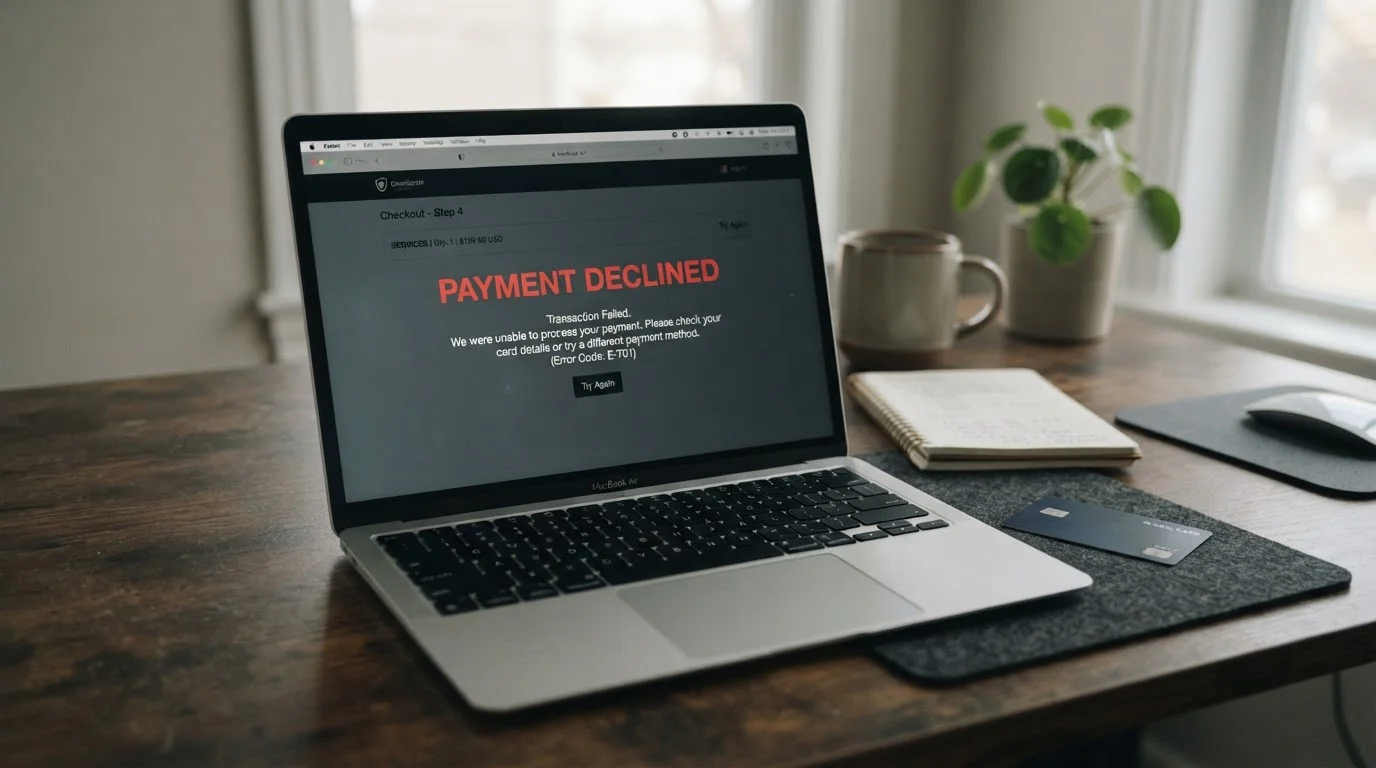
Cards used to be the lazy default. You tapped in sixteen digits, a CVV, an expiry, and the money moved. That ease died in stages between 2020 and 2024, and what remains is a fragmented mess where one bank’s debit card sails through while another’s bounces like a bad cheque.
The credit ban came first, in 2020, as an amendment to the National Consumer Credit Protection Act. Every Australian credit card issuer is now legally required to block any transaction coded with merchant category 7995, which is gambling. Commonwealth Bank jumped early and implemented the block in February 2020, months ahead of the rest. By mid-2020 the entire Big Four had locked the gate, and by 2024 a second round of legislation extended the ban to include credit funnelled through digital wallets and crypto purchases funded on credit. There are no loopholes left and no exceptions. If the card in your hand is a credit card issued by an Australian bank, it will not work at a casino cashier, full stop.
Debit is a different beast. The federal law only touches credit, which means debit cards are still legally fair game. Some banks, though, decided to extend the MCC 7995 block to debit as a policy choice, not a legal requirement. The result is a lottery where your debit card’s viability depends on which logo is on the back of it.
Visa
Visa runs the network but does not issue the cards; your bank does that. If your Visa debit card comes from NAB, ANZ or Westpac, gambling transactions generally clear unless your specific account has been fraud-flagged after repeat offshore patterns. If it comes from Commonwealth Bank or ING, there is a decent chance the bank has applied its own MCC block on debit and the transaction will bounce. The only way to know for sure is to test it with a small deposit, because the banks do not advertise these policies openly.
Visa debit deposits, where they work, are instant. Withdrawals to Visa debit depend on whether the casino and the card network support it, and most offshore operators treat debit withdrawals as second-class citizens compared to bank transfers or e-wallets. Expect one to three days if it processes at all, and have a backup method ready.
Mastercard
Same structure as Visa: the network facilitates, the banks issue, and the issuing bank’s policy is what kills or clears the transaction. Mastercard debit from NAB, ANZ or Westpac tends to work. Mastercard debit from Commonwealth or ING often does not. And just like Visa, there is no public registry of which banks block and which do not, so you find out the hard way.
Mastercard historically had slightly better offshore casino acceptance than Visa, a quirk of which payment processors the operators contracted, but by 2026 the difference has flattened out. If one works, the other probably does too.
American Express
Amex occupies a weird corner as both a network and an issuer. Australian Amex credit cards are blocked under the same federal law as Visa and Mastercard credit. Amex does not issue debit cards in Australia, so there is no debit option to fall back on. That leaves Amex off the table entirely for casino payments in 2026 unless you are using a card issued outside Australia, which brings its own foreign-transaction headaches.
The 2020 Credit Card Ban Explained
Worth spelling out the mechanics because misinformation still floats around. In June 2023, parliament passed legislation banning credit card use for online gambling. The law came into force in mid-2024, but in practice the major banks had already been enforcing it since 2020 via the MCC 7995 block. The 2024 extension closed a theoretical loophole where someone could fund a digital wallet with credit and then use that wallet balance to gamble. Now the ban applies at every hop: credit to casino, credit to wallet to casino, credit to crypto to casino. All blocked.
The law targets the card issuer, not the player. You will not get fined or prosecuted for trying to use a credit card at an offshore casino; the transaction will simply decline and that is the end of it.
Which Australian Banks Block Debit Cards for Gambling
This is the practical minefield. Commonwealth Bank is the strictest of the majors: it applies MCC 7995 blocks not just to credit but to many debit accounts as well, particularly the standard transaction accounts. Some Complete Access debit cards slip through; test before relying on it. ING also blocks debit gambling transactions as policy, even though federal law does not require it. NAB, ANZ and Westpac generally let debit clear, though their fraud engines will profile you if you make repeated offshore gambling deposits and may ask you to confirm intent or, in rare cases, hold the account for review.
The second-tier banks, Bendigo, BOQ and Suncorp, mostly allow debit gambling transactions unless your specific card has been flagged. The digital banks like ubank and Up follow their parent institutions’ policies: ubank mirrors NAB (permissive), Up follows Bendigo (permissive but with slower uplift). ING is the outlier and the one most likely to surprise a new customer who assumed “debit” meant “unblocked”.
If your bank declines a debit gambling transaction, you have three options: open an account at a bank with a more neutral stance (NAB or Westpac), switch to PayID (which every bank supports, even if they block card gambling), or use a voucher or crypto to bypass the bank entirely.
Are credit cards still allowed at Australian online casinos in 2026?
No. Since 2020, all Australian credit card issuers are legally required to block gambling transactions. The ban was extended in 2024 to include credit funnelled through digital wallets and crypto. Debit cards are not federally restricted, but some banks like CBA and ING block debit gambling as their own policy.

E-Wallets: Neteller, Skrill, ecoPayz, and MiFinity
E-wallets sit between your bank and the casino, adding a layer of indirection that appeals to anyone who does not want their bank statement screaming “offshore gambling processor” every week. You load the wallet once from your bank account or a debit card, then fund casino sessions from the wallet balance. Cashouts land in the wallet first, and you pull them to your bank when you are ready. The trade-off is straightforward: a bit more privacy, a bit more friction, and fees that vary from negligible to annoying depending on which wallet and which funding method you pick.
The e-wallet landscape for Australian casino players is dominated by four names, all UK-based and FCA-regulated. Neteller and Skrill are siblings under the Paysafe Group umbrella and have been in the game since the early 2000s. ecoPayz, which rebranded to Payz in 2022, is roughly the same vintage. MiFinity is the new entrant, launched in 2018 and built specifically for gambling and forex rather than pivoting into it from general payments like the older two.
Neteller
Neteller is the eldest statesman of the group, founded in 1999 and now part of Paysafe Financial Services Limited. It holds an FCA e-money licence and operates in over a hundred countries with more than 25 million account holders, though how many of those are active versus dormant is anyone’s guess.
The mechanics are clean. You open a Neteller account, verify your identity upfront (passport or driver’s licence, proof of address), fund it via bank transfer (free) or debit card (2.5 percent fee), and the balance sits there until you spend it. Casino deposits from Neteller are instant. Withdrawals back to the wallet take anywhere from two hours to a full day depending on the operator’s processing queue, and moving money from Neteller to your Australian bank account costs one to two percent of the amount. Neteller supports AUD alongside about twenty other currencies, so you can hold the balance in dollars and skip conversion fees if the casino quotes in AUD.
The catch, and it is one worth flagging, is Neteller’s reputation for freezing accounts when gambling activity is detected. Yes, you read that right. An e-wallet built largely on casino traffic will occasionally lock an account and demand extra documentation if its risk system decides your deposit pattern looks suspicious. It is rare, but it happens often enough that Whirlpool and Reddit threads are littered with complaints. For most users it is a non-issue, but if you are the unlucky one whose account gets flagged, expect days of back-and-forth with support before it clears.
Skrill
Skrill started life as Moneybookers in 2001, rebranded in 2011, and ended up in the same Paysafe Group stable as Neteller after a 2015 acquisition. The two products are siblings and the feature set overlaps heavily: instant casino deposits, multi-currency wallet support (Skrill handles forty-plus currencies versus Neteller’s twenty), withdrawal-to-bank fees around the same mark. Where Skrill edges ahead is in sheer currency breadth, which matters if you also gamble at European sites or hold balances in several denominations. Where it lags is the flat 5.50 euro fee to pull money to an Australian bank, a number that stings on smaller cashouts.
Skrill’s account-freeze habits mirror Neteller’s, which is no surprise given they share backend compliance infrastructure. The same “verify this, justify that” dance happens here if the risk system lights up. The flip side is that both Skrill and Neteller are absurdly well-connected to casino cashiers; acceptance is near-universal among operators serving Aussies, so if your account stays in good standing you rarely hit a wall trying to use it.
ecoPayz (Payz)
ecoPayz, now officially rebranded as Payz, has been around since 2000 and holds FCA licence 900011 under PSI-Pay Ltd. It covers a similar brief to the Paysafe pair: instant deposits, wallet-to-bank withdrawals in a day or two, multi-currency support (forty-five currencies and counting), and a tiered account structure that unlocks higher limits and lower fees as you climb from Classic to Silver to Gold to Platinum to VIP. Most Australian players sit at Silver or Gold and never bother climbing further because the gains are marginal once you clear the first verification.
The reason ecoPayz gets a look despite living in Skrill and Neteller’s shadow is its slightly gentler compliance posture. Fewer reports of surprise account locks, fewer demands for supplementary documents after routine casino deposits. It is not night and day, but enough of an edge that players burned by a Paysafe freeze will often land here next. The fees are in the same ballpark, one to two percent for withdrawal to an Australian bank, and the casino acceptance is strong if not quite as universal as the Paysafe duo.
MiFinity
MiFinity is the youngest of the four, founded in 2018 by people who used to work at Skrill and Neteller and decided the market needed a wallet built for gambling from the ground up rather than retrofitted. It holds FCA licence 900714 and has grown fast since launch, picking up operator integrations across Europe, Canada, and the Australian market.
What sets it apart is a fee structure that undercuts the old guard on several fronts and a product that embraces crypto as a first-class funding option alongside fiat. You can load a MiFinity wallet with bank transfer, debit card, or BTC, ETH, LTC and USDT, which makes it a useful bridge if you hold some crypto but the casino you want to play at only accepts fiat e-wallets. Deposits to casinos are instant, withdrawals to the wallet are typically done within a day, and pulling AUD to your Australian bank runs about one percent, cheaper than Skrill’s flat euro hit on small amounts.
The reputation for account restrictions is noticeably cleaner than the Paysafe siblings, possibly because the compliance team learned what not to do from watching Skrill and Neteller annoy their own users for a decade. MiFinity is available in over a hundred and seventy countries and the operator acceptance among Australian-facing casinos has gone from niche in 2020 to mainstream by 2026.
All four wallets do roughly the same job. Pick Neteller or Skrill if you want maximum casino coverage and do not mind the fees. Pick ecoPayz if you have had a freeze elsewhere and want a slightly lighter touch. Pick MiFinity if you like lower fees, crypto funding, and a product designed this decade.

Prepaid Vouchers: Neosurf, Paysafecard, and CashtoCode
Vouchers are the payment method for players who want a hard ceiling on a session or who do not want a single byte of casino traffic touching their bank statement. You walk into a Coles, a 7-Eleven, an Australia Post outlet or a newsagent, hand over cash (or tap your card), and walk out with a slip of paper bearing a ten- or sixteen-digit PIN loaded with a fixed dollar value. Redeem the PIN at the casino cashier and the balance appears in your account a few minutes later. No bank account, no card network, no trail tying you to the transaction beyond the retailer receipt.
The appeal is narrow but real. If you are the kind of player who sets a weekly budget and needs an external enforcement mechanism stronger than willpower, a voucher does that job better than a soft daily limit on a PayID transfer. And if you are genuinely concerned about banks profiling your gambling activity and using it against you in a mortgage application or an account review, vouchers cut the link entirely. The retailer sees a gift-card purchase under MCC 5947, which could be Netflix or Steam or anything else. The casino sees a voucher redemption with no cardholder name attached until you verify for withdrawal.
The cost of that privacy is real and upfront: purchase fees running anywhere from three-and-a-half to fifteen percent depending on the denomination, and the one-way nature of the transaction. Vouchers are deposit-only. You cannot cash out to a Neosurf PIN. When you win, you will need a second method, bank transfer or PayID or crypto, to collect.
Neosurf
Neosurf is the French incumbent, run by Neosurf Cards SAS under an ACPR payment institution licence. It launched in 2004 and has built the widest retail distribution network in Australia of any voucher system: Coles carries it on the gift-card wall in most stores, 7-Eleven stocks it in selected metro outlets, Australia Post sells it at major branches, and thousands of independent newsagents have it behind the counter. Denominations run from ten to five hundred Australian dollars depending on what the retailer has loaded.
The purchase fee is the kicker. A hundred-dollar Neosurf voucher typically costs you around $103.50 at Coles, a 3.5 percent clip. A ten-dollar voucher might cost $11.50, fifteen percent. The percentage drops as the denomination rises, so buying one large voucher is cheaper than stacking small ones, but the fee is unavoidable. There is also a dormancy charge if you sit on an unused voucher for more than twelve months; Neosurf will start nibbling away at the balance monthly until it is gone.
Redemption at a casino is straightforward: select Neosurf at the cashier, enter your ten-digit PIN exactly as printed (no spaces), choose how much of the voucher to redeem (you can use it partially and keep the balance for another time), and submit. The funds land in two to fifteen minutes. Some casinos charge a small conversion fee, one to three percent, for Neosurf deposits; check the fine print before committing.
Paysafecard
Paysafecard is the Austrian original, founded in 2000 and now part of the Paysafe Group alongside Skrill and Neteller. It is older than Neosurf and has wider global distribution—650,000 sales outlets across fifty countries—but in Australia its retail footprint is comparable: major retailers, some service stations, newsagents, Post offices. Denominations are typically twenty to two hundred and fifty Australian dollars.
The purchase fee is slightly lower than Neosurf on average, running four to seven percent depending on the retailer and the amount. A hundred-dollar voucher might cost $104. Paysafecard PINs are sixteen digits instead of ten, and redemption works the same way: cashier selection, PIN entry, instant credit. Like Neosurf, you can split a voucher across multiple deposits if the balance exceeds what you need for one session.
Paysafecard also has a dormancy penalty, a monthly €3 maintenance fee after twelve months of inactivity, which nibbles the balance down to zero over time. And like Neosurf, it is deposit-only: you cannot withdraw to a Paysafecard PIN.
The main reason to pick Paysafecard over Neosurf is if your local retailer stocks one and not the other, or if you already have a MyPaysafecard account (an optional online portal for managing multiple PINs and balances). Functionally they are near-identical and the fee difference is marginal.
CashtoCode
CashtoCode is the Maltese upstart, operated by Global Processing Services under an MFSA licence. It launched in 2013 and runs two modes: a classic voucher-PIN model like Neosurf and Paysafecard, and a cash-to-code system where you generate a barcode online and take it to an ATM or bank branch to fund it with cash. The second mode has not gained much traction in Australia; it is more of a European thing. The voucher mode works exactly like the others: buy a PIN at a retailer, redeem it at the casino, four to eight percent purchase fee, deposit-only.
CashtoCode’s Australian retail network is smaller than Neosurf or Paysafecard. You will find it in some newsagents and tobacconists, but not in Coles or Woolworths or most Post offices. Operator acceptance has grown since 2022 and by 2026 most Australian-facing casinos that take Neosurf also take CashtoCode, but it remains a niche third option rather than a default.
Where to Buy Vouchers in Australia
Coles supermarkets are the single best bet for Neosurf: check the gift-card display near the registers. 7-Eleven has Neosurf in many metro locations but availability is patchy by franchise, so call ahead if you are driving specifically for one. Australia Post sells both Neosurf and Paysafecard at major branches; smaller licensed post offices are hit-and-miss. Independent newsagents, particularly in CBD areas, usually stock at least one of the three systems. CashtoCode is spottier; expect to hunt.
If you are buying with a credit card rather than cash, the transaction usually clears because the retailer codes it as a gift card (MCC 5947), not gambling (MCC 7995). But some banks have started profiling repeat gift-card purchases as a possible gambling workaround, so a pattern of weekly Neosurf buys on the same card may eventually trigger a fraud query or a decline. Cash avoids the problem entirely.
Voucher Fees and Session Budgeting
The fee is the price of the privacy and the enforced limit. If you deposit a hundred dollars via PayID, it costs you nothing. If you deposit a hundred dollars via Neosurf, it costs you anywhere from $103.50 to $110 depending on how you bought it. Over a year of weekly play, that three to ten percent toll adds up to real money, hundreds of dollars you could have kept or wagered instead.
The counterargument is that vouchers do something PayID cannot: they create a hard floor you cannot breach in the moment. You cannot reload a voucher in thirty seconds from your phone the way you can send another PayID transfer when you are tilting. If you know that weakness in yourself, the fee might be worth it as insurance.
Can I use Neosurf or Paysafecard vouchers to withdraw my winnings?
No. Vouchers are deposit-only; there is no mechanism to pay out to a Neosurf or Paysafecard PIN. When you cash out, you will need a different method like PayID, a bank transfer, an e-wallet, or cryptocurrency. Check that the casino supports your chosen withdrawal method before you deposit with a voucher.

Cryptocurrency: Bitcoin, Ethereum, and Stablecoins
Crypto is the fastest way to get money out of an offshore casino in 2026, and it is not close. Where a PayID withdrawal might clear the same day and a bank transfer might take three, a Bitcoin payout can land in your wallet in under two hours and a Tether transfer on the Tron chain can be done in ten minutes. That speed advantage has made crypto the preferred cashout method for anyone moving four figures or more, even if they fund their account with fiat.
The flip side is price volatility if you are holding BTC or ETH, network fees that swing with blockchain congestion, and a steeper learning curve than tapping your bank’s PayID button. You need a wallet (software or hardware), you need to understand that a wrong address means permanent loss, and you need to be comfortable with the fact that AUSTRAC, Australia’s financial intelligence agency, requires any exchange converting more than ten thousand Australian dollars of crypto to fiat to report the transaction under AML and counter-terrorism financing rules. None of that is illegal; it is disclosure, not prohibition, but it is worth knowing before you cash out a big win via a local exchange.
Five coins dominate the Australian casino landscape: Bitcoin, Ethereum, Litecoin, Tether, and Bitcoin Cash. A sixth, Solana, is gaining ground fast but acceptance is still patchy. The mechanics are the same across all of them: the casino gives you a deposit address, you send from your wallet, the transaction confirms on the blockchain, and the casino credits your balance. Payouts reverse the flow: you provide your wallet address, the casino sends, and you receive once the network confirms.
| Cryptocurrency | Deposit Speed | Withdrawal Speed | Network Fee | Best For |
|---|---|---|---|---|
| Bitcoin (BTC) | 10–30 min | Under 2h | A$2–A$20 | Large withdrawals, maximum acceptance |
| Ethereum (ETH) | 2–10 min | Under 2h | A$1–A$50 (gas) | Smart-contract platforms, DeFi casinos |
| Litecoin (LTC) | 5–15 min | Under 2h | Under A$1 | Low-cost speed |
| Tether (USDT, TRC-20) | 1–5 min | 10–60 min | Under A$1 | Fastest payouts, no volatility |
| Bitcoin Cash (BCH) | 5–15 min | Under 2h | Under A$0.50 | Cheapest crypto option |
Bitcoin (BTC)
Bitcoin is the oldest, the most liquid, and the most widely accepted cryptocurrency at online casinos. Launched in January 2009 by the still-unidentified Satoshi Nakamoto, it has been running without meaningful downtime for over fifteen years and commands a market capitalisation over a trillion US dollars. Every serious offshore operator takes it.
Deposits require one to three blockchain confirmations depending on the casino’s risk settings, which translates to ten to thirty minutes of wait time. Withdrawals, once the casino approves them, usually process in under two hours, sometimes under one. The network fee is paid by whoever is sending and fluctuates with how congested the blockchain is: quiet periods might cost two Australian dollars, busy periods twenty or more. The fee is set by your wallet when you construct the transaction, and paying a higher fee gets your transaction confirmed faster.
The volatility is the main operational headache. If you deposit 0.01 BTC when the price is A$90,000 per coin, you just moved A$900. If the price drops five percent while you are playing, your bankroll shrank before you touched a spin. Stablecoins solve that problem, which is why many players use BTC for cashouts (speed) but fund with USDT (stability).
Ethereum (ETH)
Ethereum is the second-largest cryptocurrency and the backbone of most decentralised finance and smart-contract ecosystems. It launched in July 2015, transitioned to a proof-of-stake consensus mechanism in September 2022 (an upgrade called The Merge), and now processes transactions in about twelve seconds per block compared to Bitcoin’s ten minutes.
That speed difference shows up at the casino: Ethereum deposits confirm in two to ten minutes, faster than Bitcoin. Withdrawals are similarly quick, under two hours once approved. The catch is gas, the Ethereum term for transaction fees, which can swing from one Australian dollar on a quiet day to fifty on a busy one. Gas prices spike when the network is congested with DeFi activity or NFT mints, and there is no way to predict it a day in advance. You pay the market rate when you send.
Ethereum’s role at online casinos is split between straight payments (deposit ETH, play, withdraw ETH) and smart-contract-based games, particularly provably fair implementations where the outcome is verifiable on-chain. If the casino runs native blockchain games rather than traditional RNG slots, they are probably built on Ethereum or a layer-two scaling solution on top of it.
Litecoin (LTC)
Litecoin is the silver to Bitcoin’s gold, a fork created by Charlie Lee in October 2011 with the explicit goal of being faster and cheaper for everyday transactions. It generates blocks every two-and-a-half minutes instead of Bitcoin’s ten, which means deposits confirm in five to fifteen minutes, and the network fee is almost always under a dollar, usually well under.
For casino purposes, Litecoin is the no-drama option: fast enough that you are not waiting around, cheap enough that the fee is a rounding error, and liquid enough that every exchange supports it if you need to convert to AUD. It does not do anything Ethereum does (no smart contracts) and it is not as universally accepted as Bitcoin, but among the casinos that take it, LTC is often the most cost-effective choice for deposits under a few hundred dollars.
Tether (USDT)
Tether is a stablecoin, a cryptocurrency pegged one-to-one to the US dollar and backed by reserves held by Tether Limited, a Hong Kong-based company. It launched in 2014 and has grown into the largest stablecoin in the world with a market cap around $140 billion. The peg means one USDT is always worth roughly one US dollar, so you dodge the price swings that make BTC and ETH a headache for session bankroll management.
Tether runs on multiple blockchains; the two that matter for casinos are Ethereum (ERC-20 standard) and Tron (TRC-20 standard). The Tron version is faster and cheaper: deposits confirm in one to five minutes, withdrawals in ten to sixty, and the network fee is under a dollar. The Ethereum version inherits ETH’s gas fees, which can climb into the double digits, so most Australian players sending USDT to a casino pick TRC-20 unless the operator only supports ERC-20.
Tether’s regulatory history is controversial. It settled with the New York Attorney General in 2021, paying an $18.5 million fine and agreeing to regular reserve attestations, after questions about whether its dollar reserves were as solid as claimed. The peg has never broken in a way that mattered to retail users, but the cloud of mistrust lingers in some corners. For casino payments, though, USDT is the speed king: if you need money out of a cashier and into your wallet as fast as the blockchain allows, TRC-20 Tether is the answer.
Bitcoin Cash (BCH)
Bitcoin Cash is a 2017 fork of Bitcoin, born out of a fight over block size and transaction capacity. Where Bitcoin stuck with small blocks and accepted higher fees as the price of decentralisation, Bitcoin Cash opted for much larger blocks (32 megabytes versus Bitcoin’s one) to handle more transactions per second at lower cost. The result is a network that moves money nearly as fast as Litecoin and cheaper than anything except Tether on Tron.
Deposits confirm in five to fifteen minutes, withdrawals in under two hours, and the network fee is typically under fifty cents. Casino acceptance is decent but not universal; BCH sits in that second tier where most of the big operators support it but smaller ones might not bother. If your casino takes it and you want cheap crypto transfers, BCH does the job without fuss. If it does not, Litecoin is the obvious substitute.
Is cryptocurrency legal for online casino payments in Australia?
Yes. Owning, buying, selling, and transacting with cryptocurrency is legal in Australia. AUSTRAC requires reporting of fiat conversions over A$10,000 under anti-money-laundering rules, but the crypto itself is not restricted. Using crypto to fund offshore casino accounts is legal for the player; the Interactive Gambling Act targets operators, not users.

Bank Transfers and BPAY: Traditional Banking Methods
The old ways still work, though they are slower than nearly everything else. Direct bank transfer via BSB and account number, the method your parents used before the internet turned every payment instant, moves money in one to three business days and costs you nothing. BPAY, Australia’s bill-payment infrastructure launched in 1997, does the same job on a similar timeline and also costs nothing. Both have two things going for them: every bank supports them, and they handle large amounts without blinking. If you need to move five figures in one go and PayID’s daily limit is in the way, a direct transfer or a BPAY payment gets it done.
The reason they have faded into backup status is straightforward. Nobody wants to wait three days for a deposit to clear when PayID clears in ten seconds. And nobody wants to wait five days for a withdrawal when crypto pays out in two hours. Speed has become the baseline expectation and anything slower feels broken, even when it works exactly as designed.
Bank Transfer (BSB/Account Number)
This is the original rail: you enter the casino’s BSB, account number, and a reference code into your banking app or online portal, submit the transfer, and it processes through the traditional clearing system. Most Australian banks settle these transfers in one business day if you submit before the daily cutoff (usually somewhere between 3pm and 7pm depending on the bank), two days if you miss it, and three days if a weekend or public holiday gets in the way.
The daily limit for direct bank transfers is often much higher than PayID. Westpac, for instance, caps PayID at $50,000 with uplift but lets you send $100,000 a day via BSB transfer. NAB allows $100,000 daily on BPAY. If you are a high roller or you have had a very good week and need to move a large cashout from the casino to your bank in one lump, a traditional transfer does that job where PayID would require splitting it across multiple days.
The fee is zero for domestic transfers. Some banks charge if you process an international wire, but the vast majority of Australian-facing casino banking runs through Australian-domiciled accounts even if the operator is offshore, so you rarely hit an international-transfer fee.
BPAY
BPAY is the bill-payment system most Australians have used to pay their electricity or water bill at some point. It is managed by Australian Payments Plus, the same organisation behind the NPP and PayID, and connects every bank in the country. Casinos that accept BPAY issue you a biller code and a reference number; you plug those into your bank’s BPAY function, enter the amount, and submit. Settlement is one to two business days, and the daily limit is high, often $25,000 to $100,000 depending on your bank.
BPAY used to be a common casino deposit method before PayID came along. Now it is mostly a backup for players whose PayID limits are capped or whose banks have started declining PayID transfers to offshore processors. It works, it is reliable, and it is slow. That is the entire pitch.
POLi (Discontinued 2023)
POLi was the instant account-to-account option before PayID ate its lunch. Operated by Australia Post from 2006 to 2023, it let you log into your bank through POLi’s interface, authorise a payment, and have it land instantly without needing to grab a BSB or reference number from the casino. No fees, instant settlement, simple interface.
Australia Post announced in July 2023 that POLi would shut, and on 30 September 2023 it stopped processing transactions. The reason was obvious: the New Payments Platform and PayID did everything POLi did, faster, with better bank integration, and without the need for a third-party login portal. POLi’s business case evaporated.
If you see POLi listed as a deposit option on a casino page in 2026, that page has not been updated in at least two years and you should verify every other claim on it before trusting your money to the operator.
Trustly (Limited Availability)
Trustly is a Swedish payment provider that runs instant account-to-account transfers across Europe and has made attempts to break into the Australian market. It has a strong presence in markets like Germany, Sweden and the UK, where it connects directly to banks and processes payments much like POLi used to. In Australia, though, adoption has been minimal. PayID already owns the instant-transfer niche, and operators have not seen a reason to integrate a second provider doing the same job with a smaller user base.
Some casinos list Trustly as an available method for Australian players, but in practice the coverage is patchy and the user experience is clunkier than PayID. Unless Trustly builds deep integration with Australian banks, which seems unlikely given NPP’s entrenchment, it is going to remain a minor footnote.
Mobile Wallets and Pay-by-Phone (Apple Pay, Google Pay)
Mobile wallets like Apple Pay and Google Pay work brilliantly for buying coffee or tapping onto a tram. They work less brilliantly for funding online casino accounts, mostly because the underlying card is still subject to all the same restrictions that killed direct card deposits. If the card linked to your Apple Pay is a credit card, the 2020 ban blocks it. If it is a debit card issued by CBA or ING, the bank’s MCC block kills it. And even if the card clears those hurdles, casino acceptance of mobile wallets for online transactions is limited compared to brick-and-mortar retail.
Apple Pay
Apple Pay launched in October 2014 and came to Australia in April 2016. It lets iPhone and Apple Watch users store credit and debit cards in the Wallet app and pay via NFC tap or in-app with Face ID or Touch ID. For in-person retail, it is seamless. For online casino deposits, it is rare.
The reason is straightforward: mobile wallets are not a separate payment method; they are a wrapper around a card. When you use Apple Pay at a casino that supports it, the transaction still runs on the Visa or Mastercard network and hits the same issuing-bank restrictions as typing in the card number manually. If your bank blocks gambling on that card, Apple Pay does not bypass the block.
Some offshore casinos list Apple Pay as an option, but the actual success rate for Australian players is low because most card issuers treat it identically to a regular card transaction. Where it works, deposits are instant. Withdrawals to Apple Pay are almost never supported because the refund process through the card networks is cumbersome for casino operators and chargebacks are a risk they would rather avoid.
Google Pay
Google Pay follows the same structure. Launched in September 2015 as Android Pay and rebranded in 2018, it stores cards on Android (and iOS, though it competes with Apple Pay there) and lets you tap or click to pay. Casino acceptance is about as patchy as Apple Pay, and the same underlying-card restrictions apply. If the card works for direct casino deposits, Google Pay will probably work where supported. If the card is blocked, Google Pay will not save you.
For Australian casino players in 2026, mobile wallets are more of a “nice if it happens to work” option than a reliable primary method. PayID is easier, crypto is faster, and both skip the card-issuer gauntlet entirely.

Casino Deposits vs Withdrawals: Understanding the Full Payment Cycle
Most players think about deposits and ignore withdrawals until the moment they win, which is roughly when they discover that getting money into a casino is a different beast from getting it back out. The payment method you used to fund your account does not automatically work in reverse, and the speed promises on the deposit page often do not apply to the cashout.
How Casino Deposits Work
Deposits are designed to be frictionless because the casino wants your money moving in fast. You pick a method at the cashier, follow the prompts, send the payment, and the balance updates usually within seconds for instant methods (PayID, crypto, e-wallets, cards where they work) or within a day or two for slower rails (bank transfer, BPAY). There is no identity check on the way in, no approval queue, no pending period. The system is optimised for speed because hesitation costs the operator a customer.
The minimum deposit varies by casino and by method but is typically somewhere between one and twenty Australian dollars. PayID and crypto often have the lowest minimums, ten dollars or less at some operators. E-wallets and cards usually sit around ten to twenty. Bank transfer minimums can be higher, fifty to a hundred dollars, because the operator does not want to process a three-day clearing cycle for tiny amounts.
How Casino Withdrawals Work
Withdrawals are where friction lives. Every offshore casino operating under a Curacao, Malta or Kahnawake licence has to run some level of know-your-customer verification before they pay you out, a requirement baked into their gaming licence and their payment processors’ anti-money-laundering obligations. That means your first withdrawal, regardless of payment method, will almost always trigger a request for documents: government-issued ID (passport or driver’s licence), proof of address (utility bill or bank statement), and sometimes proof of payment method (a photo of your card with the middle digits obscured, or a screenshot of your e-wallet account page).
The verification process adds between one hour and twenty-four hours to your first cashout, sometimes longer if the documents you submit are unclear or the operator’s compliance team is backed up. Once you are verified, subsequent withdrawals from the same casino are faster, but that first one is always slower than the payment method’s technical capability.
KYC Verification and First Withdrawal Delays
This is where the “instant withdrawal” marketing on casino homepages meets reality. Yes, PayID can move money in seconds. Yes, Tether on the Tron chain can confirm in five minutes. But if your account is not yet KYC-verified, the casino will not release the funds until a human or an automated system has checked your documents and cleared you. That gap is why a player using PayID, the fastest deposit method, might still wait six hours for their first cashout while someone using Bitcoin, a slower deposit method, gets paid in two hours—the difference is where in the verification queue they landed.
Most casinos let you upload documents before you request a withdrawal, a move called pre-verification. If the operator supports it, do it immediately after your first deposit. The verification will process in the background and by the time you win and want to cash out, you are already cleared and the withdrawal moves at the payment method’s real speed.
Fastest Withdrawal Methods in Australia
Once KYC is out of the way, the speed hierarchy is sharp. Cryptocurrency withdrawals, particularly Tether on the Tron chain, clear in ten to sixty minutes. Bitcoin, Ethereum, Litecoin and Bitcoin Cash typically land within two hours. PayID withdrawals are approved and settled same-day at sharp operators, though some drag it to twenty-four hours. E-wallets sit in the two-to-twenty-four-hour range. Bank transfer and BPAY take one to five business days.
If your priority is getting a large win out fast, crypto is the answer even if you funded with PayID. Many players deposit via PayID for convenience and cashout via Bitcoin or USDT for speed, and operators allow that split without issue as long as you pass the verification checks.
Can You Use Different Methods for Deposits and Withdrawals?
Yes, usually, though some operators have internal rules requiring at least one withdrawal via the same method you deposited with before they will let you switch. The reason is anti-money-laundering compliance: regulators frown on players depositing with one rail and immediately cashing out via another because it looks like a money-laundering loop. The casino’s risk team wants to see that you actually played, not that you used their cashier as a currency-exchange desk.
Vouchers are the clearest example of a deposit-only method. Neosurf, Paysafecard and CashtoCode only go one way; there is no mechanism to pay out to a voucher PIN. So if you deposit with a voucher, you must choose a different method for withdrawal, usually PayID, bank transfer, or crypto.
Cards are tricky. Some casinos will process withdrawals back to the debit card you deposited with, though it is slow (one to three days) and not every card network supports it reliably. Many operators would rather send your cashout via bank transfer or e-wallet even if you funded with a card, because card refunds carry chargeback risk.
How long do casino withdrawals take in Australia?
Withdrawal speed depends on the method and whether your account is KYC-verified. Crypto (BTC, USDT, ETH, LTC) typically clears in under two hours. PayID same-day, often within a few hours. E-wallets two to twenty-four hours. Bank transfer and BPAY one to five business days. First withdrawals are slower due to identity verification, which adds one to twenty-four hours.
Do I need to use the same payment method for deposits and withdrawals?
Not always. Most casinos allow you to cash out via a different method than you deposited with, though some require at least one withdrawal using your deposit method first. Vouchers (Neosurf, Paysafecard) are deposit-only and require a separate withdrawal method like PayID, bank transfer, or crypto.
How to Choose the Right Casino Payment Method
The right method is not the one with the flashiest marketing or the longest feature list. It is the one that matches your priorities across five dimensions: speed, cost, withdrawal support, privacy, and whether your bank will let it through.
Speed: Instant vs Same-Day vs Multi-Day
If speed is the decider, the tiers are clear. Crypto and PayID win on deposits, both near-instant. On withdrawals, crypto pulls ahead with sub-two-hour settlement while PayID lands same-day. E-wallets sit in between at two to twenty-four hours. Bank transfer and BPAY drag behind at one to five days. Vouchers do not count here because they are deposit-only.
Pick instant if you value session flow, if you are depositing during a limited-time bonus window, or if you want your winnings in hand before the high wears off. Pick slow if speed does not matter and you want to avoid fees or you are moving a large amount that exceeds PayID limits.
Fees: Zero-Cost vs Purchase Fees vs Network Fees
PayID, bank transfer, and BPAY are free. Debit cards are free where they work. Crypto has network fees ranging from under a dollar (Litecoin, Bitcoin Cash, Tether TRC-20) to twenty dollars (Bitcoin in congestion). E-wallets charge withdrawal fees of one to two percent or a flat amount like Skrill’s 5.50 euros. Vouchers are the most expensive at three-and-a-half to fifteen percent purchase fee, a toll you pay just to load the money.
If cost is your priority, PayID is the winner unless your bank has blocked it, in which case crypto (picking a low-fee coin) or a direct bank transfer are the next cleanest options. Vouchers are a cost you accept for privacy or session control, not efficiency.
Security and Privacy
Every method here is secure in the narrow sense that your money is not vanishing into the ether, but privacy is a spectrum. Bank-direct methods (PayID, bank transfer, BPAY, debit cards) leave a clear trail on your statement, though PayID does not expose your full account details to the casino. E-wallets add a layer of indirection; the casino sees the wallet transaction, your bank sees a wallet top-up, and the two are not immediately linked on a casual glance at your statement. Vouchers and crypto cut the link entirely: the retailer does not know what you spent the voucher on, the blockchain does not care what you bought, and the casino does not see your bank details.
If you are privacy-focused, vouchers and crypto are the answers. If you do not care and you value speed and cost over discretion, PayID is the pragmatic default.
Withdrawal Support (Bi-Directional vs Deposit-Only)
This is the trap that catches new players. Vouchers are deposit-only. You cannot cash out to a Neosurf PIN. Cards are mostly deposit-biased; withdrawals to debit cards work sometimes but operators do not love them and the timing is slow. Everything else is bi-directional: PayID, bank transfer, BPAY, e-wallets, and crypto all handle deposits and withdrawals.
Before you pick a deposit-only method, confirm the casino supports a withdrawal method you are comfortable with. Depositing with a Paysafecard voucher when you have no intention of opening a Neteller account or setting up a Bitcoin wallet is a recipe for frustration when you win.
Deposit Limits and Session Budgeting
PayID limits vary by bank, from ING’s $1,000 default to Westpac’s $50,000 uplift. Crypto has no hard limits; you can send as much as the blockchain will carry. E-wallets have account-tier limits that climb with verification level. Vouchers have a hard ceiling equal to the face value you bought. Bank transfer and BPAY have high daily caps, often $100,000.
If you want a hard external limit to stop you from chasing losses, vouchers enforce that better than any digital rail. You cannot reload a Neosurf voucher from your phone in thirty seconds the way you can fire another PayID transfer. If you trust yourself or you do not want artificial barriers, PayID or crypto give you the most flexibility.
Bonus Eligibility and Payment Method Restrictions
Some casino bonuses explicitly exclude certain payment methods from eligibility. E-wallet deposits, for instance, are commonly excluded from welcome bonuses at European-facing operators, a legacy rule designed to stop bonus abusers from cycling funds through Skrill and Neteller. In the Australian offshore market that exclusion is less common but it still appears in the fine print of some promotions.
Vouchers, crypto, and PayID are almost always bonus-eligible because they carry no chargeback risk for the operator and they signal a committed deposit rather than a low-friction test. Cards, where they work, are also usually eligible. Always check the bonus terms before depositing if you are chasing a match or free spins offer.
Which payment method has the lowest fees for Australian players?
PayID, bank transfer, and BPAY are free. Among crypto options, Litecoin, Bitcoin Cash, and Tether on the Tron chain (TRC-20) have the lowest network fees, usually under one Australian dollar. Vouchers cost the most, with purchase fees between 3.5 and 15 percent.
Minimum Deposits, Bonuses, and Payment Method Restrictions
Minimum deposit thresholds vary by casino and by payment method, but the range is narrow. Most operators set minimums between ten and twenty Australian dollars for PayID, crypto, e-wallets, and cards. Bank transfer minimums are often higher, fifty to a hundred dollars, because the operator does not want to process multi-day clearing cycles for pocket change. Vouchers depend on the denomination you bought; if you grabbed a ten-dollar Neosurf, that is your minimum.
Low-deposit casinos, marketing themselves on minimums of one, two, or five Australian dollars, have proliferated in the last few years as competition intensified. These are niche plays aimed at budget-conscious or risk-averse players who want to test a platform without committing a full twenty-dollar note. PayID and crypto are the usual methods for these micro-deposits because the cost structure supports them; a one-dollar bank transfer would be absurd.
Bonus restrictions tied to payment methods are less common in the Australian offshore market than in regulated European markets, but they still appear. Some welcome bonuses exclude e-wallet deposits from eligibility, a rule borrowed from European operators trying to curb bonus abuse. Always read the terms before depositing if a bonus is part of the plan, because the time to discover you are excluded is before you fund the account, not after.
Legal and Tax Considerations for Australian Players
The legal position for Australian players using offshore casinos is odd but settled. The Interactive Gambling Act 2001 makes it illegal for an operator to offer online casino games to Australian residents from within Australia or to advertise those services in Australia. The law targets the operator, not the player. There is no provision in the IGA that penalises an individual for placing a bet at an offshore site. ACMA, the regulator, focuses enforcement on blocking domains and pressuring payment processors, not chasing punters.
That does not mean the offshore operators Australians use are licensed here. They are not. They operate under Curacao eGaming licences, Malta Gaming Authority licences, or Kahnawake Gaming Commission licences, and they serve Australian customers from outside Australian jurisdiction. The practical implication is that if a dispute arises between you and the operator, your recourse options are weaker than they would be with a locally regulated entity. You can file a complaint with the operator’s licensing body, but your leverage is limited.
Interactive Gambling Act 2001 and Player vs Operator Targeting
The IGA is a strange piece of law because it creates an offence (providing online casino services to Australians) that is almost never prosecuted, and it leaves the consumer in a grey zone where the activity is not explicitly illegal for them but the service itself is prohibited. Courts have not prosecuted individual Australians for playing at offshore casinos. Enforcement has been almost entirely focused on the supply side: blocking websites, pressuring advertising platforms, and pushing payment providers to cut off operators.
From a practical standpoint, that means you are not risking a fine or criminal charge by using an offshore casino. What you are risking is a weaker set of consumer protections and the possibility that your bank or a payment provider decides to decline transactions on policy grounds even though the law does not require them to.
The 2020 Credit Card Ban
The credit card ban, enacted as an amendment to the National Consumer Credit Protection Act and enforced since 2020, is the one direct federal restriction on player behaviour. It is illegal for an Australian credit card issuer to process a gambling transaction. That ban was extended in 2024 to include credit funnelled through digital wallets or used to purchase cryptocurrency later used for gambling.
The prohibition sits with the issuer, not the player. You will not be prosecuted for attempting to use a credit card at a casino; the transaction will simply decline and that is the end of it. The policy rationale was harm minimisation, stopping players from gambling on borrowed money.
AUSTRAC and Cryptocurrency Reporting (A$10,000+ Threshold)
AUSTRAC, the Australian Transaction Reports and Analysis Centre, is the financial intelligence agency that enforces anti-money-laundering and counter-terrorism financing laws. Under those laws, any cryptocurrency exchange or service provider operating in Australia must report transactions where more than $10,000 AUD equivalent is converted between crypto and fiat currency. The threshold applies per transaction, not cumulatively.
In practical terms, if you cash out a large casino win in Bitcoin and you convert it to Australian dollars through a local exchange like CoinSpot or Swyftx, and the amount exceeds ten thousand dollars, the exchange will report that transaction to AUSTRAC. This is not an accusation of wrongdoing; it is routine compliance. AUSTRAC collects the data, analyses it for patterns, and passes suspicious-activity flags to other agencies if something looks off. For a typical recreational player converting a casino payout, the report goes into a database and nothing else happens.
The key point is that converting crypto to fiat via an exchange is where the reporting obligation kicks in. If you receive Bitcoin from a casino and you hold it in your wallet or spend it as Bitcoin, no report is generated because there is no fiat conversion. If you later sell that Bitcoin for AUD, the exchange handling the sale reports it if it exceeds the threshold.
Are Casino Winnings Taxable in Australia?
No, not for recreational gamblers. The Australian Taxation Office treats gambling winnings as windfalls, not income, under Taxation Ruling IT 2655. If you are gambling as a hobby or pastime rather than as a business, your winnings are not assessable and you do not declare them on your tax return. That applies regardless of the size of the win, the frequency of play, or the payment method you used.
The line between recreational gambling and professional gambling is where the question gets interesting. If you are gambling systematically with the intention of making a profit, keeping detailed records, applying a structured approach, and earning the majority of your income from gambling, the ATO may treat you as carrying on a business and assess your net gambling income as business income. That is rare. The vast majority of Australians playing online casino games are recreational punters and their winnings are tax-free.
Why do some Australian banks block gambling transactions?
The 2020 credit card ban requires all banks to block gambling on credit cards. Some banks, like Commonwealth and ING, extend that block to debit cards as a policy decision, not a legal requirement. They do it to manage risk, reduce chargebacks, and avoid regulatory scrutiny. Banks also run fraud-detection systems that profile repeat gambling transactions and may decline payments if the pattern looks suspicious, even when the transaction itself is legal.
Picking a more gambling-neutral bank like NAB or Westpac, or using a payment method that bypasses card rails entirely (PayID, crypto, vouchers), solves the problem for most players.
Fast Withdrawal Casinos Australia 2026 — Instant Payouts Compared
Content created by the «Bankroll» team